Many companies believe stalled growth is a strategy problem, but more often it is a leadership problem. In this Mike on the Mic episode of The Better Leadership Team Show, I explain how to determine whether your current leaders can scale with the business and what to do when they cannot.
The Real Reason Companies Get Stuck
When companies experience flat revenue or low profitability, leaders often assume the problem is strategy. In reality, it is usually a people problem.
- Every growing company eventually faces the same question:
- Do we have the right leaders to take us to the next stage?
- If the goal is to double the business in three years, leadership capability becomes the limiting factor.
- The biggest barrier to growth is rarely:
- Strategy
- Market conditions
- Competition
- Instead, the biggest barrier is often the leadership team itself.
The Hardest Decision Leaders Must Make
Evaluating whether long-time leaders can scale with the organization is one of the most difficult decisions a CEO or senior leader must make.
Common emotional barriers include:
- Loyalty to early team members who helped build the company
- Fear of making the wrong decision
- Guilt about “outgrowing” people who were once the right fit
- Avoidance of difficult conversations
Despite these emotions, avoiding the issue carries major risks.
The Cost of Avoiding Leadership Change
Failing to address leadership gaps can create serious organizational consequences.
Potential outcomes include:
- Stalled growth
- Low profitability
- Failure to achieve the company’s long-term vision
- High performers leaving because they feel others are being carried
- Leadership hesitation around bold strategic decisions
When leaders lack confidence in their team, they often hold back the company’s true potential.
Moving Beyond Titles: Three Lenses for Evaluating Leaders
To determine whether leaders can scale with the company, I recommend evaluating them through three lenses:
- Mindset
Mindset determines whether someone can grow as the organization grows.
Key questions include:
- Are they learning and evolving?
- Are they open to feedback?
- Can they think bigger than today’s challenges?
- Can they handle the rollercoaster of growth?
- Skillset
As businesses evolve, leaders must continuously develop new capabilities.
Consider:
- Are they building new skills as the business scales?
- Are they adapting to technology changes such as AI?
- Are their capabilities aligned with where the company is going?
The skills needed today are rarely the same as those needed even a few years ago.
- Behavior
Leadership behavior reveals whether someone is truly operating at the next level.
Important signals include:
- Leading through others rather than doing everything themselves
- Acting consistently with company values
- Modeling the culture the organization wants to build
Signals That a Leader Can Scale
Certain behaviors strongly indicate that someone can grow with the company.
They Hire People Better Than Themselves
Strong leaders:
- Seek talent stronger than themselves
- Build powerful teams rather than protecting their own status
They Delegate and Empower
Leaders who scale:
- Delegate responsibilities
- Empower decisions closer to the front lines
- Avoid micromanagement
Their Team Improves Over Time
A clear indicator of scalable leadership is continuous team improvement.
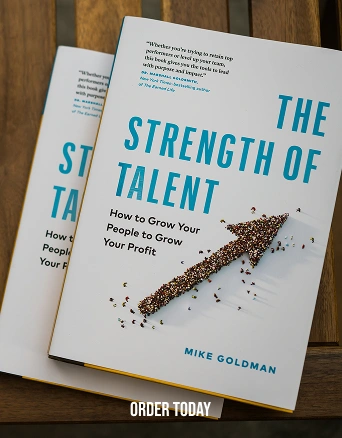
Using the Talent Density framework from my book The Strength of Talent, improvement can be measured through:
- Productivity
- Culture fit
- The Talent Density Indicator (TDI)
- Percentage of high performers
- Minus percentage of low performers
A rising TDI trend suggests a leader who is successfully building a stronger team.
They Raise the Bar
Scalable leaders:
- Continuously challenge their teams
- Raise expectations year after year
- Avoid settling for yesterday’s standards
They Seek and Apply Feedback
Leaders who scale actively pursue feedback and act on it.
To support this, I recommend alternating two types of weekly one-on-one meetings:
- Accountability and Feedback Meetings
- Leader’s agenda
- Focus on performance and feedback
- Coaching Meetings
- Team member’s agenda
- Focus on development and guidance
They Focus on Results, Not Tasks
High-level leaders measure success by outcomes.
They:
- Focus on results rather than activity
- Understand the goals they are accountable for
- Align work to those outcomes
They Embrace Accountability
Strong leaders:
- Welcome accountability
- Communicate issues early
- Proactively raise challenges and opportunities
Red Flags That a Leader Cannot Scale
Certain behaviors signal that someone may struggle to grow with the company.
Blaming Instead of Owning Results
Leaders who cannot scale often:
- Blame the market
- Blame others
- Focus on tasks instead of outcomes
Staying in the Weeds
They frequently:
- Hold on to operational tasks
- Struggle with strategic thinking
- Resist big-picture conversations
Constant Claims of Being Understaffed
These leaders often believe:
- Their department is always chaotic
- More people are always the solution
Fear of Hiring Strong Talent
Another red flag is insecurity.
Examples include:
- Avoiding candidates who are more skilled
- Claiming someone is “overqualified”
Resistance to Accountability
When accountability increases, these leaders:
- Push back
- Make excuses
- Hide behind completed tasks
Fear of Growth
They often resist bold visions because they fear the complexity and responsibility that growth requires.
The “Rehire Test”
A powerful question to evaluate leadership fit is simple:
If you could do it all over again, would you enthusiastically rehire every member of your team?
If the answer is no, that insight may signal the need for change.
Another perspective comes from Netflix leadership philosophy:
- If a key employee left tomorrow, how hard would you fight to keep them?
- If the answer is “not very hard,” it may be time to make a change.
Make Talent Reviews a Leadership Habit
Leadership evaluation should not happen only during crises.
Instead:
Conduct quarterly talent assessments
Evaluate every team member on:
- Productivity
- Culture fit
At the senior leadership level, everyone should be:
- High performing
- Or capable of reaching that level within three to six months
What to Do With Each Type of Performer
High Performers
- Invest in them
- Challenge them
- Coach them
- Re-recruit them regularly
Emerging Performers
If someone has potential:
- Set clear expectations
- Provide coaching and development
- Align on the path to improvement
Solid but Limited Performers
These individuals may:
- Be strong contributors
- But lack the ability to operate at the leadership level required
Possible solutions:
- Move them to a different role
- Redesign responsibilities
Wrong Person for the Organization
If someone is simply not the right fit:
- Provide a compassionate exit
- Help them transition to a better opportunity elsewhere
Everyone has the potential to be a superstar somewhere.
Keeping someone in the wrong role ultimately harms both the individual and the company.
Start With a Clean Vision
To evaluate your leadership team, begin with a clean slate.
Ask yourself:
- What must the leadership team look like in order to achieve our three-year vision?
- What skills, behaviors, and mindsets are required?
Then compare that ideal with your current team.
A Final Leadership Question
One final reflection for leaders:
If you were hiring today, would you choose each member of your leadership team again?
If the answer is yes, you are on the right track.
If the answer is no, it may be time for a courageous conversation.
Great companies require great leadership teams, and sometimes building the future means reshaping the team that got you here.
Mike: When a company is stuck, flat revenue, barely profitable. Most leaders think they have a strategy problem, but typically it’s not a strategy problem at all. It’s a people problem, every growing company. Gets to the same question sooner or later, and the question is, do I have the right leaders to get me to the next stage?
if I wanna double in three years, do I have the right leaders to get me there? So I wanna focus this episode on helping you think maybe a little bit more clearly on who can scale, who can’t, and what to do next. And.
This tends to be, not only a hard question, but probably the hardest question a leader has to deal with.
Senior leaders are faced with difficult challenges, difficult decisions all the time, but there’s nothing quite like that decision about someone who’s. Been one of your senior leaders, been on your team for a long time and they were the right folks to get you here, but they may not be the right folks to get you where you want to go.
And it’s hard obviously, because there are emotions. Involved. We have loyalty to folks, especially those folks that were, you know, early team members, early leaders in our company. We have loyalty to them, so making a difficult decision about whether they’re the right people. To get us where we want to go is a crazy difficult decision.
we have emotions, focused on fear of making the wrong decision related to members of the team and certainly a level of guilt we feel when we’ve kind of outgrown people. When we’ve grown and our company has grown, or at least we’d like our company to grow at a different. Velocity then longtime members of the team.
That is a very hard question to be confronted with a very hard decision to make.
but the risks of not making the decision, making the wrong decision is. Tremendous. It’s everything related to a company. the risk of avoiding those tough decisions are certainly stalled. Growth. And low profitability in the organization.
losing the ability to reach that vision you have for the company. The level of growth, the level of fulfillment, the level of impact you want to have on your clients, on your team, members on the community, and maybe on the world you risk great people leaving because they’re carrying others and great people leaving.
Because they’re tired of seeing lower performers hold the company back when they’re doing everything they can to move it forward. And there’s a risk of, as a senior leader, the CEO or other senior leaders holding back on big important strategic moves because they don’t think they’ve got the right team.
To get you there.
you know, maybe the theme of this episode is a book I’ve got behind me on the shelf. If you’re watching this on video by Marshall Goldsmith, and it’s called What Got You Here Won’t Get You There. And the biggest thing that’ll hold you back from your vision for your company, for your team, for your department, the biggest thing that’ll hold you back from your vision, it’s not strategy, it’s not economy, it’s not your competition.
it’s your team and the individuals on your team. We need to move beyond. Job titles. Just because somebody has, you know, VP in their title doesn’t mean they’re the right leader for the organization. And I wanna help you to look at this question of do we have the right people? Do I have people that can scale with us, leaders that can scale with us as we scale the company?
And there are really three. Three different lenses that, that I wanna coach you to look through as you think about your team.
It’s mindset, skillset, and behavior. So mindset is, you know, when you think about the members of your team, are they learning. I should say, when you think about a member of your team, each member of your team, not the team as a group, but each member of your team, are they learning?
Are they open to feedback? Do they have the ability to think bigger? All those things are mindsets. Do they have the ability to deal with the rollercoaster ride of growing a company? So that first lens is mindset. The second is skillset. Are they building new skills? As the business evolves, what new skills do you need in the business?
As the business scales, as the business scales, as the world changes, as new technologies like AI come into play, when you think of each leader, are each of them building the new skills they need as the business evolves? I don’t know of any. Companies or functions or roles within an organization these days where the skills people needed even four or five years ago, or three years ago, you know, those are not the same skills they need now.
So first lens was mindset. Second was skillset, and the third is behavior. You know, are they leading through others versus. Doing it all themselves. You know, are they behaving as the leader you need them to be? Are they behaving in a way that’s consistent with your core values and what the culture you want to create within your organization?
So I wanna give you some signals, help you with some signals to, to assess. Your team members and figure out which ones can scale and which ones can.
So here are some signals that tell you that chances are pretty good that someone can scale and is scaling with your organization. First, they hire people.
Better than themselves. They don’t have the fear of hiring someone that’s more skilled than they are. They realize that the way they’re gonna build their team is by surrounding themselves with great people. So they hire people. Better than themselves. They delegate and empower. They don’t hoard. They don’t micromanage, they don’t think they need to do everything themselves.
they not only delegate tasks, but they empower people to make decisions closer to the front lines so they could move quickly and be agile. Their team improves quarter after quarter. Now, it may not happen every single quarter that way, but you wanna see a trend of their team improving. And what do I mean by improving?
Well, I would go back to my talent density framework and if you don’t know my talent density framework, it comes from my book, the Strength of Talent. And there are probably a dozen or more. Podcast episodes where I talk about it, but using that talent density framework to figure out if your team is improving by looking at individual and group level productivity and culture fit.
Are they living the core values? And in my talent density framework, there’s something called the talent density indicator, which very simply is the percent of your folks that are high performing, minus the percent that are low performing and low performing could be low from a productivity standpoint or low from a culture fit standpoint, that talent density indicator that trends should be going up.
And if you have a leader and their trend, the, their TDI trend, their talent density indicator trend is going up. Meaning they consistently have more and more high performers and less low performers. That’s a signal they can scale. A leader that is consistently challenging their team members raising the bar versus holding them accountable to what was okay last year.
They’re raising the bar on their team and challenging them. Challenging them. That’s a signal they can scale. A leader that seeks feedback and when they get that feedback, they implement it. That’s a signal they can scale.
Now, by the way, for your team. Give people a chance to seek feedback. Make sure you’ve got a consistent and frequent one-on-one meeting rhythm with each of your team members.
I recommend two different types of one-on-ones and alternate them each week. One is called the accountability and feedback meeting, and one is the coaching meeting. The accountability and feedback meeting is your agenda. It’s exactly what it says. You’re holding people accountable, giving them feedback.
The coaching meeting is their agenda. It’s a chance for them to seek feedback, coaching advice.
A signal they can scale is that they focus on results, not just tasks. Senior leaders get results. They don’t complete tasks. They get results. And I see very often leaders that believe they’re successful because they checked the boxes and did five things they said they were gonna do, but did they get the results?
Leaders that could scale understand what results are expected of them, and they focus on those results versus the specific tasks. Leaders that could scale, bring up new ideas, and they not only bring up new ideas, but new ideas that might add to their workload, new ideas that may might make life more complicated for them.
They’re okay doing that because they’re up for the challenge and they wanna scale with the company. These leaders don’t fear being held accountable. In fact, they love when that bright light of accountability shines on them and they proactively communicate issues. They don’t wait until you ask them for the status of something or ask them why something is late.
They proactively communicate issues, challenges, opportunities, questions before you as their leader does. So there are a whole bunch of signs. That you can see and you could use to evaluate which members of your team have the ability to scale with you.
But now I wanna share the other side. What are some signs, what are some signals that you may have someone on your team that really is not ready and not able to scale with the company?
These folks blame others or the market instead of owning their results. Remember I said folks that, that do have the ability to scale, they focus on results, not tasks. These folks focus more on tasks, and even more than that, they blame. They don’t really take responsibility for getting those results.
Leaders that can scale will figure it out. Leaders that can’t blame, leaders that can’t scale are constantly in the weeds. They can’t let go of old tasks. When you are trying to have a strategic conversation, they will bring you down to the 13 very specific reasons why think that can’t happen tomorrow as opposed to thinking bigger picture.
Leaders that can’t scale, always feel like their team is short staffed. Their department, their function always seems chaotic regardless of resources, and they always believe they’re short staffed. If I only had more people, if I only had more people, and they always only need more people to get the job done.
Leaders that can’t scale are afraid to hire people that are more skilled than they are. There’s a fear that it’ll mean that they don’t have a role anymore. There’s a fear that another person being great will make them look bad. They use excuses like, oh, I think that person’s overqualified.
Leaders that can’t scale, resist structure, process, accountability, the leaders that can scale, when you shine that bright light of accountability down, they love it. The leaders that can’t, when you shine the bright light of accountability, they scatter. They scatter, they make excuses. They hide behind all the tasks they get done, versus being accountable for results.
They constantly push back on any vision that’s different, significantly different from who you already are as a company. They have trouble thinking big, partially because they’re afraid they’re not gonna be able to handle that more complex piece of work coming down the pike. If you are gonna grow, they fear that they can’t do that work.
They’re just trying, they’re treading water, just trying not to drown now. So they’re never gonna bring the new idea that’s gonna make life more complex and more challenging. they’re actually gonna push back on those ideas and make excuses, that we’ve never done that before. You know, or we’re too short staffed.
Or pick one.
Maybe the bottom line way to think of this, when you’re thinking of your team and you’re saying, do they have the ability to scale? The question is, when you think of everyone on your team, if you had a chance to do it all over again, would you enthusiastically rehire. Everyone on your team, and I’m pausing ’cause I want you to think about that.
If you had a chance to do it all over again, would you enthusiastically rehire everyone on your team? For most of us, an honest answer to that can mean revolutionary change in our companies. I love the way Netflix does it. There’s a great book by Reed Hastings called No Rules, and he talks about the idea of thinking about each of your team members, and if one of them came into your office tomorrow morning and said they were quitting to go work for the competition, how hard would you fight?
To keep them. And if you wouldn’t fight very hard. Reed believes, and I agree with them, you ought to give them a very nice severance package now and send them on their way. Your team needs to be made up of people that you would fight to keep if you wanna achieve that vision moving forward. So.
let’s talk a little bit about what to do with this insight of these different signals is, first I’d say don’t just think about this now, although I do want you to think about this now, but this is not about a one time crisis.
Make this a regular part of your rhythm as a leader or as a leadership team, if you can do that. I recommend a quarterly talent assessment where everyone is being assessed based on productivity and culture fit, and each leader is challenged to make the difficult decision to figure out what actions they need to take for their highest performers, for their mediocre folks, for their low performers.
Make the quarterly talent assessment. A part of your rhythm and if you are on a leadership team or if you are the leader of the leadership team, I believe at the senior leadership team level, every member of that senior leadership team needs to be high performing, which means that the highest levels of productivity and culture fit, they need to be high performing or at least have the potential to get there in the next three to six months.
Or they don’t be, they don’t belong on the team.
Superstars don’t work for mediocre leaders very long. If you have folks that are mediocre at a senior leadership team level, trust me, it’s not getting better as you cascade down through the organization.
So when you think about the members of your team, for those folks that are high performing.
High-end productivity, high-end culture fit. Invest in them, challenge them, coach them, re-recruit them. For those folks that aren’t quite there yet, but you believe they can get there. In the next three to six months, get crystal clear about your expectations for them to get up to that level and not just clear in your mind, but align with them on those expectations and challenge them, coach them, mentor them, do whatever you can to get them there for those folks on your team that are solid but limited.
They don’t have the potential to get to that high performing level, possibly move them to a different role where they could excel. You know, don’t keep them in a seat where they can’t excel if the, especially if they’re at the senior leadership team level. If you’ve got a great person, someone who’s high in culture fit, but they’re low in productivity, they may be in the wrong role.
Can you redesign the role they’re in?
Shift them to a different role, and if you’ve got someone who’s just the wrong person, it’s not just a wrong role, but it’s a wrong person, no matter what role they’re in, then you owe it. To yourself. You owe it to your team, you owe it to your clients, you owe it to this team member to help them with a compassionate, timely exit to coach them out of the organization.
We shy away from that because we’re afraid of having the difficult discussion. We’re afraid of hurting someone. These are human beings, and of course they are. I believe everyone has the ability to be a superstar somewhere, and if you’re keeping someone around out of some misplaced sense of loyalty, you’re hurting them as well.
And remember, you’re not judging their worth as a human being. You’re just judging their fit for a role in your company at this stage of growth.
So how should you be having this conversation with yourself? Well, I wanna challenge you to start with a clean sheet of paper and think, you know, what does your team need to look and act like in order to achieve the three-year vision of your company?
Start with that clean sheet of paper. What does it need to look like? And then look at your team. How well do they map to that? Ask yourself, am I letting my loyalty to a few
hurt our ability to grow, to be fulfilled, to have true impact? And are you really just protecting yourself? From the discomfort of having a difficult discussion, are you willing to let your discomfort have this big an impact on your company?
So that’s what I want you to think about.
I also want you to work with your team on this. Make sure your team is clear on what that three year vision is for the company or for your area of accountability.
Make sure your team understands what the team needs to look like and act like in order to be successful, so they could figure out whether they’re a fit or not, so they could figure out if they want to be a fit or not. And if you are an individual and you don’t have a team, and you’re listening to this ask for honest feedback.
On what the next stage of your company or your team demands, and then understand with your leader what the development path is and how you can transition to that next stage, and whether that’s even a place you want to go.
Last way to look at it, if you’re a leader. Is, think about each member of your team and ask, if I were making this decision fresh today, would I rehire this leader into this role? The answer’s yes. Beautiful. If the answer’s no, you got a tough discussion to have. I always say, if you want a great company, you need a great leadership team.
And sometimes that means courageously reshaping the team for the next stage. Talk to you soon.